

What Is a Short Fade Haircut?
A short fade haircut is one of the cleanest, sharpest looks a man can walk out of a barbershop wearing. At its core, it features longer hair on top that gradually blends into shorter, tighter hair on the sides and back eventually fading down to the skin or near-skin level. That seamless gradient is what gives this cut its name and its undeniable appeal.
What makes the short fade so universally loved is its adaptability. Whether you want something understated for the office or something bold enough to turn heads on a Saturday night, there’s a fade variation built exactly for that. The top can be styled as a textured crop, a slick back, a quiff, a comb-over, or kept close and clean the fade simply frames it all.
Since emerging from military grooming and Black barbershop culture in the 1940s and 1950s, the short fade haircut has evolved into one of the most requested styles worldwide. And in 2026, it shows absolutely no sign of slowing down.
Why the Short Fade Is Still Dominating in 2026
Trends come and go, but the short fade haircut has done something rare it became a grooming staple rather than a passing moment. In 2026, it remains one of the top-requested cuts in barbershops globally, and the reasons are straightforward.
First, it works for virtually every hair type. Straight, wavy, curly, coily a skilled barber can adapt a fade to any texture. Second, it suits almost every face shape when chosen correctly. Third, the short fade is incredibly versatile. It pairs with countless top styles, beard lengths, and personal aesthetics, from sharp and professional to relaxed and creative.
Social media has also played a huge role. Platforms like Instagram, TikTok, and YouTube continue to showcase barbers producing jaw-dropping fades, inspiring millions of men to keep the style in rotation. A well-executed fade is visually striking and photographs beautifully which only adds to its cultural staying power.
Types of Short Fade Haircuts
Before diving into the full list, it helps to understand the core fade categories. Each one differs primarily in where the taper begins on the head and how dramatically the hair is shortened.
Low Fade
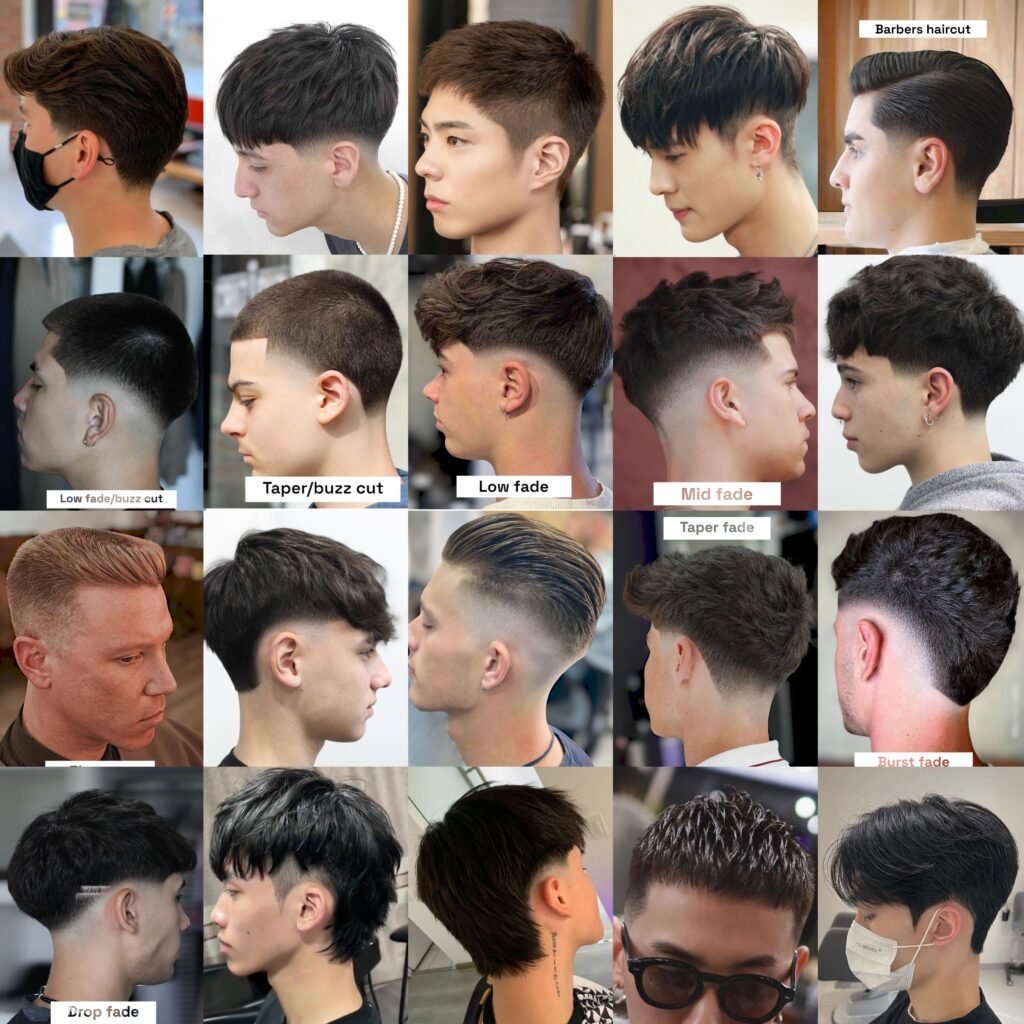
The low fade starts just above the natural hairline, tapering down within about an inch above the ear. It’s the most subtle and conservative of the fade family clean, professional, and elegant without being aggressive. Perfect for workplace environments and first time fade wearers.
Mid Fade
The mid fade, also called a medium fade, begins around the temple area roughly halfway up the sides of the head. It strikes the ideal balance between subtle and bold, making it the most versatile and most-requested fade style. It works for virtually any lifestyle, from corporate to creative.
High Fade
Starting near the crown, the high fade creates maximum contrast between the longer top and the shaved-down sides. It’s the boldest of the three primary fade heights sharp, attention grabbing, and particularly effective for men with thick hair who want to put the top style front and center.
Skin Fade (Bald Fade)
A skin fade also called a bald fade takes the hair all the way down to bare skin, creating the most dramatic gradient possible. It can be executed at low, mid, or high height, and it demands a skilled barber to pull off cleanly. The result is striking, precision barbered art.
Taper Fade
A taper fade blends elements of both traditional tapers and modern fades. It gradually shortens the hair but doesn’t necessarily go all the way to the skin. It’s a gentler, softer take often preferred by professionals who want a modern edge without anything too bold.
35 Best Short Fade Haircuts for Men
Here are 35 standout short fade haircut styles worth considering in 2026 organized by aesthetic and hair type for easier browsing.
Classic Styles
- Low Fade with Side Part — Timeless and office-ready. Clean lines, natural flow.
- Mid Fade Comb Over — Polished and versatile. Works in boardrooms and bars alike.
- High Fade Crew Cut — Short, tight, athletic. Nearly zero styling required.
- Skin Fade Buzz Cut — Maximum cleanliness. Pure confidence in minimal hair.
- Taper Fade with Classic Part — A gentleman’s choice. Subtle, refined, always sharp.
Textured Styles
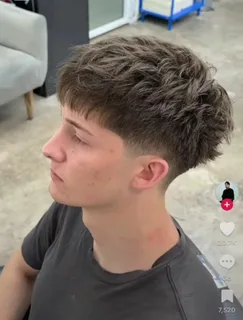
- Mid Fade Textured Crop — The most popular style of 2025–2026. Choppy, modern, effortless.
- Low Fade French Crop — Structured fringe, faded sides. Clean but with character.
- High Fade with Messy Top — Controlled chaos. Great for thick or wavy hair.
- Mid Fade Quiff — Volume at the front, tight sides. A modern classic.
- Skin Fade with Spiky Top — Sharp contrast, bold personality.
- Low Fade Brush-Up — Hair swept forward and up. European-inspired, effortlessly stylish.
- Mid Fade Faux Hawk — A soft strip of height down the center. Modern edge without the commitment.
- Taper Fade with Textured Fringe — Soft front, sharp sides. One of the most wearable combinations.
- High Fade Caesar Cut — A cropped fringe paired with bold fade contrast. Neat and structured.
- Mid Fade Pompadour — Retro-inspired, modernized with matte products and a softer silhouette.
Curly & Wavy Hair Styles
- Low Fade Curly Top — Keeps natural curl on top, fades clean below. Easy management, great texture.
- Skin Fade with Afro Top — Volume and definition above, precision below. A stunning contrast.
- Mid Fade Wavy Comb Over — Natural wave with directional flow. Relaxed but polished.
- High Fade Coil Crop — Tight coils styled forward with a crisp high fade. Bold and modern.
- Taper Fade Twist Out — Defined twists on top with a clean tapered edge. Rich texture and dimension.
- Low Fade Curly Quiff — Curls pushed forward and up. Great for oval and heart-shaped faces.
- Burst Fade with Curls — The fade curves dramatically around the ear. Dynamic and eye-catching.
Beard Combinations
- Low Fade with Short Beard — A clean, symmetrical pairing. The fade and beard line flow as one.
- Skin Fade with Full Beard — Bold contrast between the sharp sides and a fuller beard. Strong, masculine look.
- Mid Fade with Designer Stubble — Balanced and sharp. One of the most photogenic combinations.
- High Fade with Beard Fade — The fade continues into the beard for one seamless transition.
- Taper Fade with Goatee — Classic masculine pairing. Works especially well with oval faces.
Modern & Trending Styles (2026)
- Low Taper Blowout Fade — Retro volume with a modern fade. One of the fastest-growing trends this year.
- Drop Fade with Textured Top — The fade dips behind the ear. Creates a striking side profile.
- Fade with Hard Part Line — A razor-cut part carved into the hair. Instant sophistication.
- Fade Mullet — Short faded sides, longer textured back. Rebellious, stylish, surprisingly wearable.
- Low Fade Comma Hair — Hair bent forward in a soft curve at the front. K-pop influenced and trending globally.
- Mid Fade Side Sweep — Long top swept to one side with a defined mid fade. Smart-casual perfection.
- Skin Fade with Line Up — A crisp edge-up on the forehead and temples adds geometric precision.
- High Fade Slick Back — Hair combed straight back, sides shaved high. Sleek, powerful, occasion-ready.
How to Choose the Right Fade for Your Face Shape
Choosing the right short fade haircut isn’t just about what looks cool on someone else it’s about what works with your face structure.
Round faces benefit from height on top and tight sides. A high or mid fade with a quiff or brush up adds vertical volume that elongates the face and balances wider cheekbones.
Square faces have strong jawlines that pair naturally with softer blends. A low or mid fade with a textured or messy top avoids making angular features appear too harsh.
Oval faces are the most versatile almost any fade height and top style works well If you have an oval face, consider yourself lucky and experiment freely.
Heart-shaped faces (wider forehead, narrower chin) work best with low fades and volume kept closer to the middle and bottom of the head to create balance.
Oblong or rectangular faces benefit from mid fades with fuller sides rather than high fades that add even more length. Avoid excessive height on top.
When in doubt, bring a reference photo to your barber and ask for their professional read on your face shape. A good barber will always adapt the cut to suit you specifically.
Short Fade Haircuts by Hair Type
The beauty of the short fade haircut is how well it adapts to different textures. Here’s how to approach it based on what’s growing out of your head.
Straight Hair
Straight hair holds lines cleanly and responds well to sharp, precise fades. Pair it with structured styles like slick-backs, side parts, or comb overs for a polished result. Use a light pomade or styling cream for hold without stiffness.
Thick Hair
Thick hair benefits enormously from a fade because it removes excess bulk from the sides and lets the top do the talking. High and mid fades work especially well here, and a textured crop or pompadour keeps the weight manageable.
Fine or Thin Hair
For finer hair, a low or mid fade keeps the sides from looking too bare while the top retains some volume. Styling powder or a lightweight clay can create the illusion of thickness. Avoid going too short on top length here helps.
Curly Hair
Curly hair and fades are a natural pairing. A mid or skin fade below a natural curl pattern creates stunning contrast. Use a curl defining cream or mousse, let hair air dry or diffuse, and let your texture do the heavy lifting.
Coily or Afro Textured Hair
A skin fade with a shaped afro or defined coil top is one of the most impressive barbershop looks possible. The precision of the fade elevates the natural texture above it. Regular touch-ups are essential to keep the contrast crisp.
How to Style and Maintain Your Fade
A fresh short fade haircut looks incredible on day one. Keeping it looking that way requires a little consistency and the right approach.
Styling at home starts with the right products for your hair type. Matte clay or texture paste works well for most textured or short styles. Pomade gives a sleeker, shinier finish for slick backs and comb-overs. Sea salt spray adds movement and casual texture for wavy or naturally messy looks.
For straight hair: Apply styling cream to damp hair, then blow dry with medium heat, lifting at the roots for volume. Finish with light-hold gel or hairspray.
For curly hair: Work a curl defining cream through damp hair and either air dry or use a diffuser on low heat. Avoid touching the curls while they dry to prevent frizz.
Maintenance frequency depends on your fade type. Skin fades and high fades start losing sharpness in as little as one to two weeks. Mid fades typically hold well for two to three weeks. Low fades and taper fades can stretch to three or four weeks without losing their shape significantly.
Between barbershop visits, a quality edge-up tool at home can help keep the hairline and neckline clean.
What to Tell Your Barber
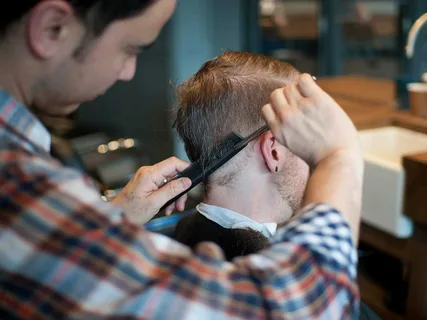
Walking into the barbershop and knowing exactly how to communicate your desired short fade haircut saves time, prevents miscommunication, and gets you the best possible result.
Start with the fade height: low, mid, or high. Then specify the fade type: skin fade, taper fade, or a defined number (guard 1, 2, etc.). Describe what you want on top length, texture, direction of styling. Mention whether you want a line-up or edge up on the hairline, and whether the sideburns should be faded into the beard or left defined.
A photo reference is always your best friend. Save an image from this guide or from Instagram and show it directly to your barber. It removes guesswork and gives them a concrete visual target to work from.
Don’t be afraid to ask questions during the cut. A great barber will welcome the conversation.
FAQ
How long does a short fade haircut last before needing a touch up?
It depends on the fade type. Skin fades typically need a refresh every one to two weeks. Mid and low fades can last two to four weeks before the gradient starts to look grown out. If you want to stay consistently sharp, plan your barber visits accordingly.
Is a short fade haircut suitable for all hair types?
Yes. One of the biggest strengths of the short fade is its adaptability. Straight, wavy, curly, coily, thick, or fine — a skilled barber can execute a fade that works beautifully with any hair texture.
What’s the difference between a fade and a taper?
A taper gradually shortens the hair down toward the neckline but doesn’t necessarily go all the way to the skin. A fade goes to skin level and typically finishes above the natural hairline, creating a more dramatic gradient. Both are clean and stylish the fade is simply bolder.
Can I get a short fade haircut if I have a receding hairline?
Absolutely. A low skin fade or a taper fade with a line up can actually minimize the appearance of a receding hairline by creating clean, deliberate edges rather than an uneven natural hairline. Talk to your barber they can tailor the fade placement to work with your hairline.
What products should I use to maintain a short fade at home?
For textured or matte styles, reach for a clay or fiber paste. For sleek styles, a pomade works well. Curly hair benefits from a curl cream or mousse. Keep a small edge-up tool at home to maintain the hairline between barber visits, and use a soft-bristle brush to keep the top styled in the direction you want.